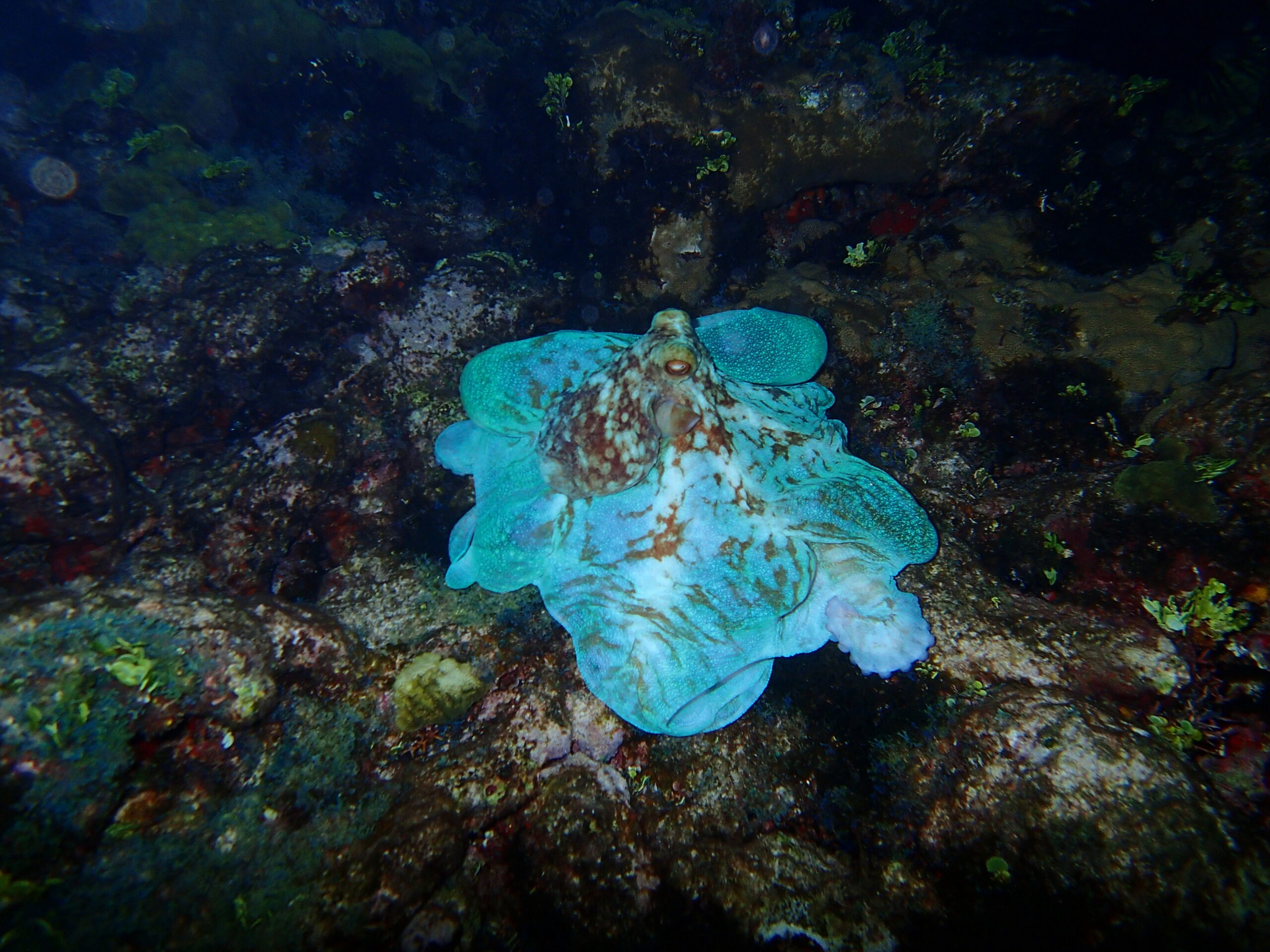
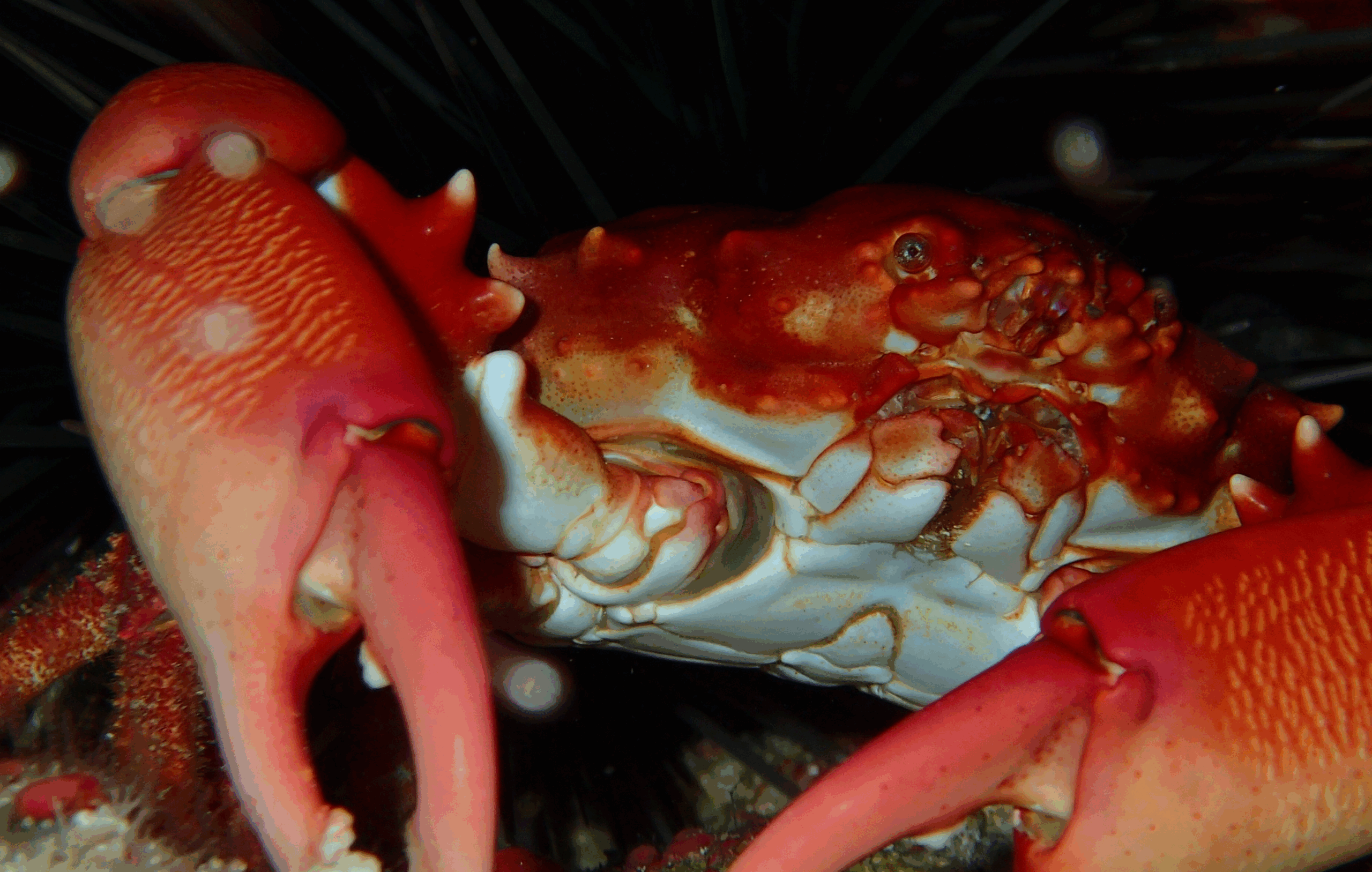
La belleza de la vida en los arrecifes tras la puesta de sol
]
Descripción del tour
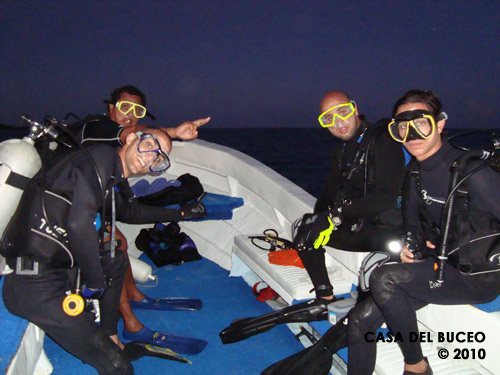
Para buceadores certificados. Exploración nocturna de impresionantes atmósferas submarinas con una sola botella de agua.
Rango de profundidad: Aprox. 12 metros (40 pies).
PUNTO DE ENCUENTRO Y SALIDA:
Nuestro puerto deportivo en Isla Mujeres. (Servicio de recogida privada disponible para grupos privados con un coste adicional + tasas de atraque, si corresponde). Click AQUÍ para nuestra ubicación.
BUCEO SOSTENIBLE
¿Qué es MUSA y cómo contribuyes a la conservación de la vida marina practicando snorkel en este lugar?
Reembolso del depósito debido a las condiciones climáticas:
Se abonan 150 pesos por persona, no reembolsables, una vez confirmada la reserva. El importe restante será reembolsable en su totalidad si debemos cancelar la reserva debido a condiciones climáticas adversas y no es posible reprogramarla.
IMPORTANTE:
Si es la primera vez que bucea, consulte con su médico para una evaluación y aprobación para esta actividad. Los participantes deben gozar de buena salud y no deben presentar problemas de oído, nariz, corazón o pulmones para practicar ningún tipo de buceo.
*Debe transcurrir un período de 24 horas entre su última inmersión con nosotros y su vuelo de regreso.
*Se recomienda reservar con anticipación, ya que es la única manera de garantizar la disponibilidad y todas las referencias de su tour.
PAQUETES:
Disponible a partir de un mínimo de 3 actividades completadas. Sujeto a temporada y disponibilidad.
[ Comienza tu Viaje ]
Aprox. 50 min.
NOCHE
[ Reserva Aquí ]
3,000
MXN
Por Persona
Esplendor único
Un mundo diferente en ausencia de luz…
Edades
12 o superior + Comprobante válido de certificación de aguas abiertas
Incluye
Equipamiento completo
Drinking water
Agua potable
Qué traer
Toallas
Trajes de baño
Certificado PADI o equivalente.
En caso de padecer alguna afección médica preexistente (o cualquier otra condición especial), le rogamos que se ponga en contacto con nosotros con antelación y nos envíe un certificado médico válido y firmado.
MUSA [Museum of Underwater Sculptures]
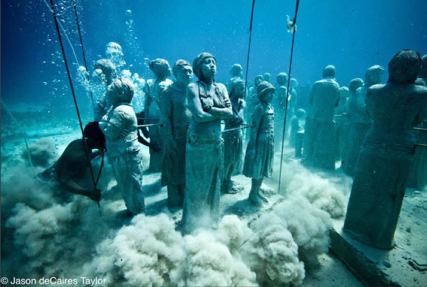
MUSA is an innovative project designed to counteract the effects of climate change on our oceans and reefs. This museum, still under construction, is located off the coast of Isla Mujeres. Its official opening took place on November 26, 2010, and it will ultimately feature 12 galleries housing approximately 1,364 artificial habitats. The goal is to mitigate the cumulative impact of the nearly 800,000 tourists who visit the national marine park each year, while simultaneously increasing the total biomass of the reef system and habitat areas for marine life colonization. The project was spearheaded by Dr. Jaime González Cano, local director of Mexico’s Ministry of Environment and Natural Resources (SEMARNAT). Seeking a way to alleviate pressure on the local reef system without closing the national underwater park, Dr. Cano contacted British sculptor Jason deCaires Taylor to collaborate on the construction of one of the world’s largest and most ambitious underwater art installations. The project was made possible through the collaboration of the Cancun and Isla Mujeres Nautical Associations and other private sector sponsors. (musaislamujeres.com)
Excerpts from The Guardian article titled "Silent evolution in Cancun, Mexico".
For GrrlScientist
Hypothesis: The creation of an underwater sculpture will alleviate tourist pressure on nearby coral reefs while providing a new habitat that encourages the establishment of more reefs.
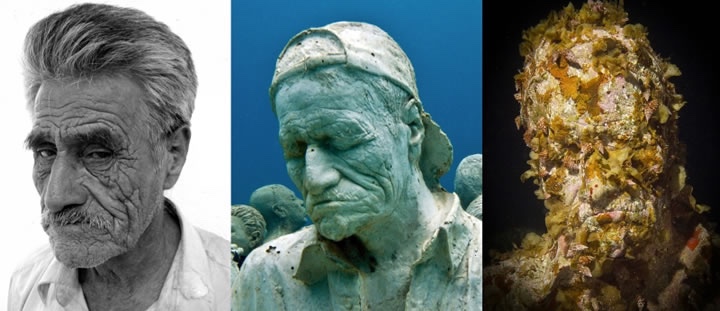
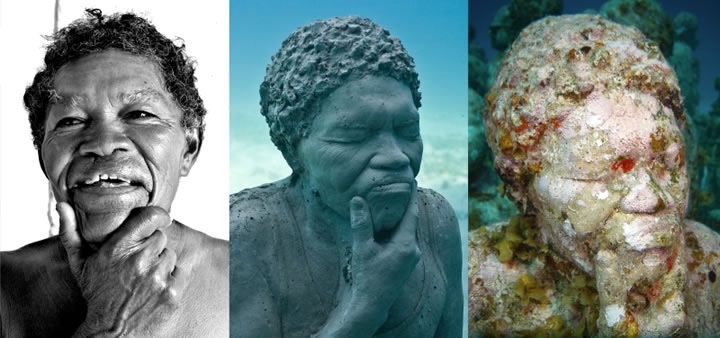
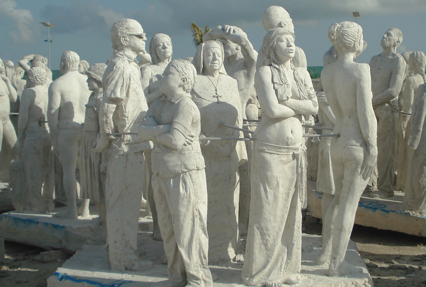
British artist and sculptor Jason deCaires Taylor has created a massive underwater sculpture, “The Silent Evolution.” This sculpture weighs over 120 tons and is composed of 400 individual statues molded from the likenesses of local Mexican people, representing a cross-section of society.
The sculpture has two objectives: first, it is easily accessible to scuba divers and snorkelers, thus relieving pressure on the nearby natural reefs, which are visited by 750,000 tourists each year. Second, this installation will lay the foundation for a coral reef-like ecosystem that will attract diverse aquatic creatures to the Cancun and Isla Mujeres National Marine Park. It is made of a special cement, ten times harder than normal and with a neutral pH (favorable for corals). The statues are anchored to a barren, rocky seabed 10 meters deep. Coral reefs are formed from calcium carbonate secreted by the bodies of countless tiny marine animals. Often called the “rainforests of the sea,” coral reefs are some of the most diverse ecosystems on the planet. Surrounded by nutrient-poor ocean waters, they provide food and shelter for approximately 25% of all marine species, including fish, mollusks, worms, crustaceans, echinoderms, sponges, tunicates, and other cnidarians.
The most well-known coral reefs are found in shallow tropical waters, but they can also be found in cold or deep waters. Although they cover less than 0.1% of the world’s ocean surface (roughly the same area as Norway), they are one of the most threatened marine ecosystems in the world. Currently, 10 percent of the world’s coral reefs are already dead and another 60 percent are at risk due to destructive human-related activities, including ocean acidification and rising water temperatures due to global warming, as well as agricultural and urban runoff, pollution, overfishing and a variety of other threats.
Other sculpture exhibits that can be seen during our tours outside of Isla Mujeres include:
“Seascape”, “The Dream Collector”, “Time Bombs”, “Man on Fire”, “The Banker”, “Anthropocene” and “Urban Reef House”.
Images from www.musaislamujeres.com
By Jason deCaires Taylor. Images from www.musaislamujeres.com